
Talking Really Blog

Talk is NOT cheap, just plentiful

Law Change allows Deaf Jurors

- Posted in News and Politics by

A leading Deaf campaigner has welcomed the government’s “long, long overdue” announcement that it will finally change the law to allow Deaf people who use British Sign Language (BSL) to serve on juries.

David Buxton (pictured) has spent a decade campaigning and lobbying ministers and other parliamentarians to persuade them to change the law.

Now the Ministry of Justice and the Home Office have announced that their new police, crime, sentencing, and courts bill includes measures that will allow profoundly deaf people to sit on juries in England and Wales for the first time.

The measure is part of a bill that ministers say will “crackdown on crime” and “keep our streets safe”, and which includes controversial measures on the right to protest, but which also includes measures they say will produce a “smarter, fairer justice system”.

One of those measures is to allow BSL-users to serve as jurors, after more than two decades of campaigning by Deaf people.

Common law rules currently ban the presence of a “stranger” in the jury deliberation room, but this will now be changed, with the bill introducing measures that will allow a BSL interpreter into the room.

Under the changes, interpreters will have to sign a confidentiality agreement that states their obligation to remain impartial and not pass on any discussions that take place in the jury room.

The Ministry of Justice said the change would open up jury service to more than 80,000 BSL-users across England and Wales.

Buxton, a former chief executive of the British Deaf Association (BDA) and now chief executive of the disabled people’s organization Action on Disability has been campaigning and lobbying ministers since 2011 to make the change in the law.

He said he was “very pleased” that the government was finally acting.

He was part of a Ministry of Justice working group that discussed the issue during the 2010 coalition government, which led to a promise to review the legislation after the 2015 election. David, deaf juror But no action had been taken by 2017 when Buxton himself was called up for jury service.

When he attended the court and said that he was Deaf and would be able to take part using a BSL interpreter, he was informed that he was not required.

He later launched a claim against the government for a judicial review of the ban, but he agreed to his legal action being put on hold after the Ministry of Justice said it would look into the matter further.

By the following year, no progress had been made, so he began lobbying parliamentarians and the government.

Jeff McWhinney, his predecessor as BDA chief executive, had himself been told by a crown court judge in 1999 that he could not serve as a juror because the law prevented him bringing an interpreter – a “13th person” – into the jury room.

The Labour government also said it was considering a change in the law at the time.

Buxton said this week: “It’s now 2021, and finally, a new day dawns with this change to common law enabling Deaf sign language users to be part of the justice system.

“This is long, long overdue but very welcome.”

He praised those who had supported the campaign, including his solicitor Louise Whitfield, as well as Professor Jemma Napier, Matthew Banks, and Linda Richards, and he also thanked justice secretary Robert Buckland.

But he stressed that the legal change was only “one more small step towards our goal of a British Sign Language Act in order to achieve true access and equality”.

Buckland said: “Disability should not be a barrier to people carrying out this most important civic duty.

“I am delighted we can open up jury service to many thousands more people and ensure our justice system becomes as accessible and inclusive as possible.”
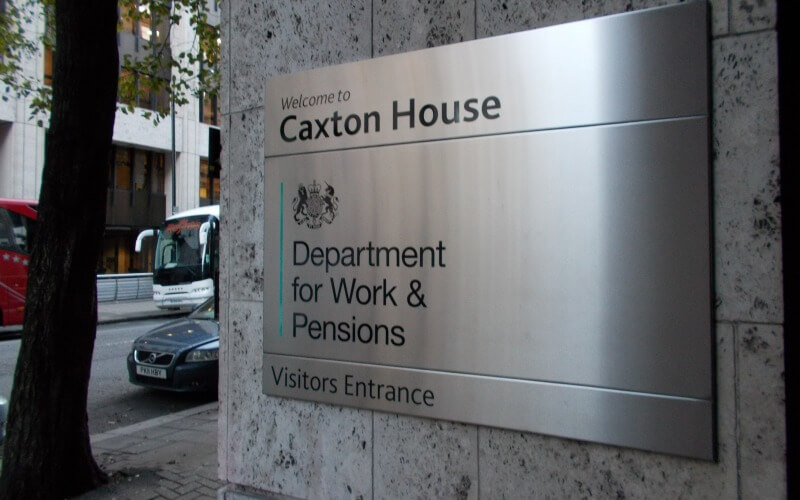
Two disabled people have launched legal action against the Department for Work and Pensions (DWP) over its failure to offer recipients of so-called legacy benefits the same £20-a-week benefit increase given to those on universal credit.

They and hundreds of thousands of other disabled people were outraged when chancellor Rishi Sunak again failed to provide them with the same benefit “uplift” that was first handed to universal credit claimants at the start of the pandemic last March.

Instead, Sunak used last week’s budget to extend the uplift to those on universal credit for another six months.

This means that an estimated 1.9 million disabled people will continue to miss out on the £20-a-week payments.

The two campaigners have secured legal aid for their claim for judicial review of the failure to extend the uplift to those on the out-of-work disability benefit, employment, and support allowance (ESA).

They are arguing, through legal firm Osbornes Law, that the government’s decision has unlawfully discriminated against them as disabled people, under the European Convention on Human Rights.

One of the two claimants has requested anonymity, but the other, Philip Wayland, from Essex, told Disability News Service (DNS) that he believes the failure to extend the uplift was “blatant discriminatory policy”. caxton house DWP He said: “Their claim is ‘we have put our arms around the most vulnerable people when they have categorically not done that.

“After 10 years of it, that is what pushed me into it, because I have had enough.

“It was an accumulation of the last 10 years, feeling as though we were being treated as second-class citizens, of years of feeling ignored and treated badly.”

He said he believed that the government was deliberately withholding the uplift from disabled people to try to force them to move onto universal credit and its stricter regime of conditions and sanctions.

Wayland, who has been receiving ESA for the last 10 years, is set to receive an annual inflation-linked increase of just 65p a week in his ESA next month.

Both the Commons work and pensions committee and DWP’s own social security advisory committee have called on DWP to extend the uplift to those on legacy benefits.

And last week, as part of its #More4All campaign, Disabled People Against Cuts delivered mailbags full of the testimonies of disabled people to DWP, the Treasury, and 10 Downing Street, describing the financial struggles they had faced during the pandemic.

Many of them wrote of their “soaring food costs”, including the extra costs of needing to have food delivered during the pandemic, and how they have “to choose between eating and heating”.

One said: “I would be able to bathe more and have my heating on. And be able to eat three times a day instead of two times.”

Another said simply: “On chemo… need to eat properly.”

Wayland said he was appalled when he heard Therese Coffey, the work and pensions secretary, tell an MP this week that she did not even ask Sunak to extend the uplift to those on legacy benefits.

Coffey told the SNP’s Marion Fellows to encourage people on legacy benefits to “go to independent benefits calculators to see whether they would automatically be better off under universal credit (UC)” rather than waiting to be moved across to UC by DWP in the next few years.

Early in the crisis, Coffey had argued that extending the uplift to those on legacy benefits like ESA and jobseeker’s allowance would risk the “safety and the stability of the benefits system”.

Only last week, DNS reported how it was branded “vexatious” by DWP for trying to secure a key unpublished document that could finally show how many disabled people are expected to lose out in the move to universal credit.

The most recent DWP equality impact assessment, published nearly a decade ago, in November 2011, suggested that the number of disabled households gaining financially from universal credit would be at least matched by the number losing out (with about 800,000 households in each group), with disabled people who are out of work particularly likely to lose out.

By noon today (Thursday), the Treasury had still not been able to explain last week’s decision not to extend the uplift to those on legacy benefits.

A DWP spokesperson said the department could not comment on ongoing legal proceedings, but he pointed to the comments made by Coffey on Monday, and similar comments by fellow DWP minister Will Quince, who said the uplift had been introduced “to support those facing the most financial disruption due to the pandemic”.