
Disability Etiquette: Small Actions, Big Impact
In a world that values inclusion, the way we interact with people who have disabilities matters more than we often realise. Disability etiquette isn’t about complicated rules or political correctness—it’s about simple, everyday respect that helps everyone feel valued and independent. These small actions remove barriers, build confidence, and create genuinely welcoming spaces.
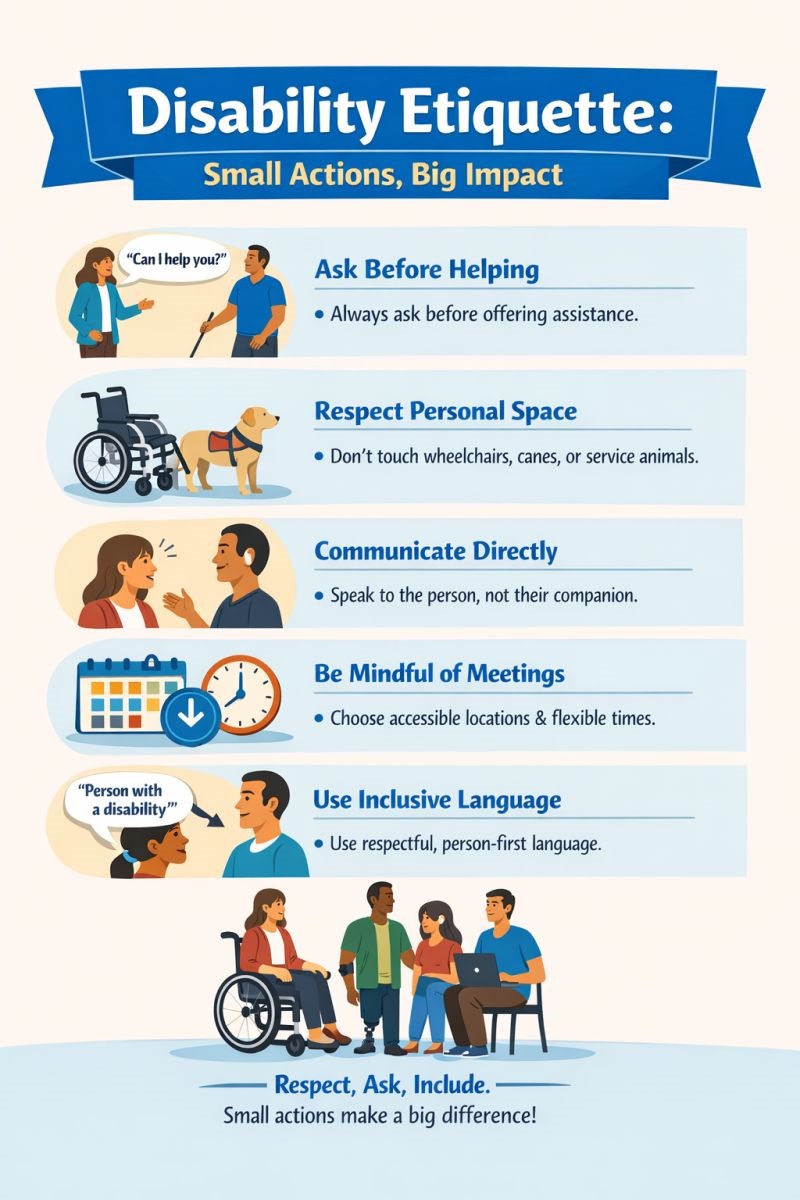
The following guide is based on the core principles of disability etiquette.
1. Ask Before Helping
“Can I help you?”
One of the most common mistakes is assuming someone needs assistance and jumping in without asking. Whether it’s opening a door, carrying something, or guiding someone across the street, always pause and ask first.
Why it matters: Many people with disabilities are highly independent. Uninvited help can feel patronising or even undermine their autonomy. A quick, respectful question shows you see the person first and respect their choices.
2. Respect Personal Space
Wheelchairs, canes, crutches, walkers, and service animals are extensions of a person’s body—not public equipment.
Never lean on, push, or touch a wheelchair without explicit permission. The same rule applies to canes, guide dogs, or any service animal. These tools are personal and often essential for mobility and safety.
Quick etiquette checklist:
Treat a wheelchair like someone’s legs—don’t move it unless asked.
Don’t pet, feed, or distract a service animal while it’s working.
Keep your hands to yourself unless invited.
3. Communicate Directly
Speak to the person, not to their companion, interpreter, or caregiver.
Even if someone uses a wheelchair, has a speech difference, or is accompanied by a support person, direct your words and eye contact to them. If you need something repeated or clarified, ask the individual—not the person beside them.
Example: “Can you ask him if he wants coffee?” -- “Would you like coffee?” (spoken directly to the person)
This simple shift shows respect and recognises their full personhood.
4. Be Mindful of Meetings and Events
Accessibility starts before the first hello.
When scheduling meetings, trainings, or social gatherings:
Choose venues with ramps, elevators, wide doorways, accessible restrooms, and adjustable seating.
Offer flexible times—some disabilities involve fatigue, medical appointments, or transportation challenges.
Ask in advance: “Is there anything that would make this meeting more accessible for you?”
Small adjustments (virtual options, captioning, quiet spaces, or longer breaks) make participation possible for everyone.
5. Use Inclusive Language
Language shapes attitudes. The respectful choice is person-first language.
Say:
“person with a disability”
“person who uses a wheelchair”
“person with autism”
Instead of:
“the disabled”
“wheelchair-bound”
“autistic person” (unless the individual prefers identity-first language)
Person-first language reminds us that disability is one part of a person’s identity, not the defining label. When in doubt, ask the person how they prefer to be described—it’s the ultimate respectful move.
The Bottom Line: Respect, Ask, Include
Disability etiquette boils down to three powerful words: Respect, Ask, Include.
These aren’t big, heroic gestures—they’re small, consistent choices that cost nothing but create enormous impact. When we practice them, we build communities where everyone can participate fully and feel genuinely welcome.
Next time you interact with someone who has a disability—at work, in public, or at an event—remember: a moment of thoughtfulness can turn an ordinary encounter into a positive, inclusive experience.
Small actions really do make a big difference.