
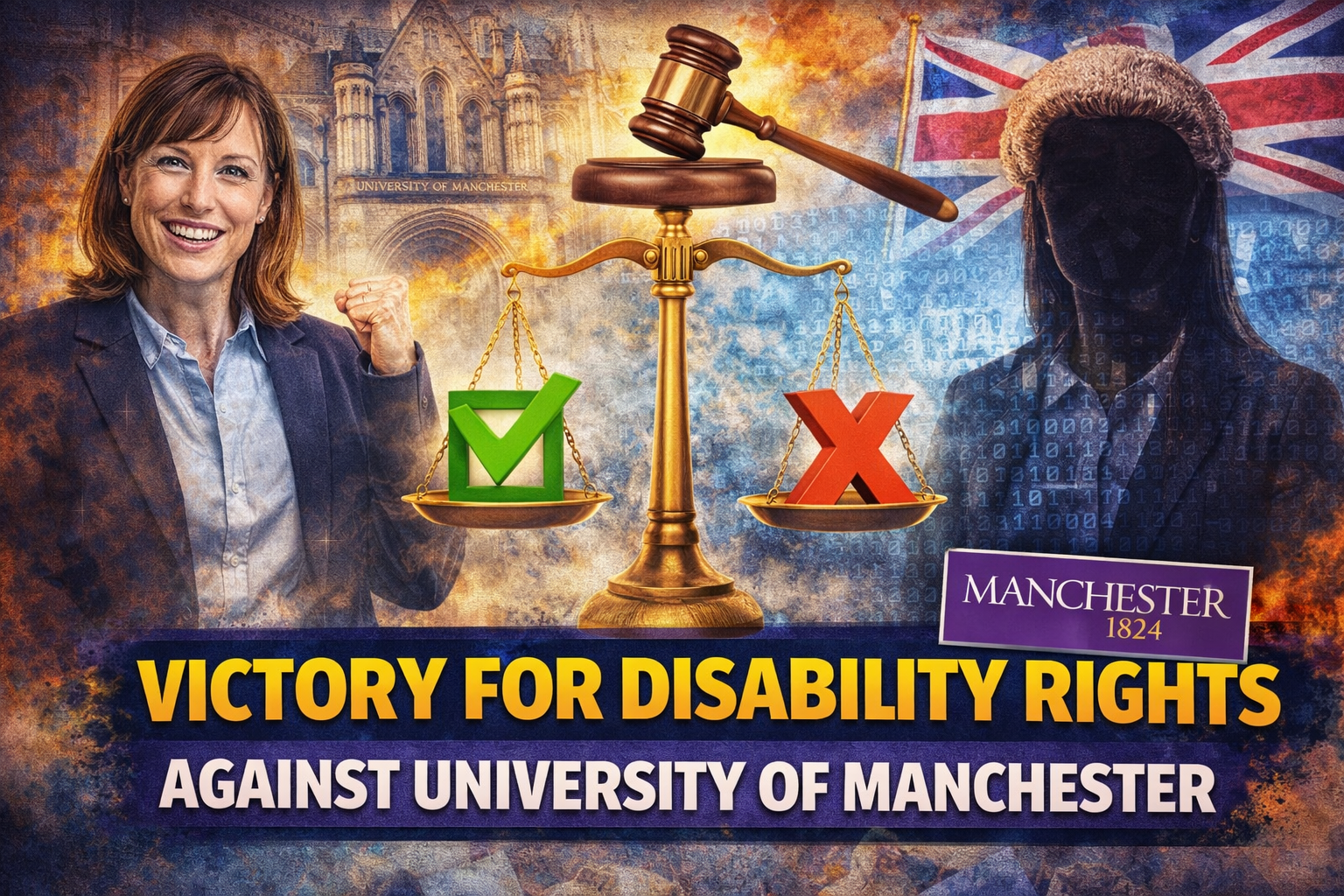
Important Victory for Disabled Workers in the UK
In a crucial ruling for disability rights across the UK, a dyspraxic learning technologist has successfully won claims of disability discrimination against her former employer, the University of Manchester. This case, brought by Karenne Sylvester, underscores the vital importance of employers recognising and accommodating the unique ways disabilities can manifest in the workplace, as mandated by the Equality Act 2010.
Understanding the Case: Dyspraxia and Reasonable Adjustments
Ms. Sylvester, who has dyspraxia, explained that her condition significantly impaired her short-term memory and language processing. This made it difficult for her to consistently recall and use a colleague's updated pronouns after their gender transition. While the university took disciplinary action, the tribunal found they failed to properly consider how her dyspraxia affected her ability to recall and process this information.
The tribunal ruled that the university breached the Equality Act 2010 by not adequately considering Ms. Sylvester's disability and whether reasonable adjustments could have mitigated the issue. As a result of the university's actions, Ms. Sylvester was removed from an additional role, isolated from colleagues, and moved to a different team – actions she believed sabotaged her career.
What This Means for Disabled People in Employment
This ruling sends a clear message to all employers in the UK:
-
Employers Must Investigate Disability Links:
If an employee's conduct is questioned, and disability is raised as a possible factor, employers have a legal obligation to genuinely investigate whether the disability contributed to the behaviour. This might involve consulting occupational health or other external experts. -
Reasonable Adjustments Are Key:
Employers must consider and implement reasonable adjustments to support disabled employees. In this case, the university failed to explore less discriminatory alternatives, such as mediation or tailored support, which could have addressed the situation more proportionately. -
Manager Training is Essential:
Managers need comprehensive training to understand how various disabilities can manifest in workplace behaviour, particularly when they affect cognition, memory, or social interaction. This helps ensure fair and informed responses. -
Balancing Protected Characteristics:
The case also highlights the complexities employers face when different protected characteristics intersect. However, experts confirm that this ruling does not diminish the need to protect other groups, such as transgender employees, from harassment. Instead, it emphasises the need for employers to adopt a balanced, evidence-based, and proportionate approach to all workplace issues.
Your Rights and How 'Talking Really' Can Help
This significant tribunal decision reinforces that disabled individuals in the UK have strong legal protections in the workplace. If you feel that your disability has not been properly considered by your employer, or that you have faced discrimination:
- Know your rights under the Equality Act 2010.
- Don't hesitate to seek advice if you believe your employer is not making reasonable adjustments or is acting disproportionately.
- Organisations like 'Talking Really' are here to provide guidance and support for navigating these challenges.
This case is a powerful reminder that conduct which might appear deliberate can, in some instances, be directly linked to a disability. Employers must ensure their responses are fair, proportionate, and fully compliant with disability discrimination law.