
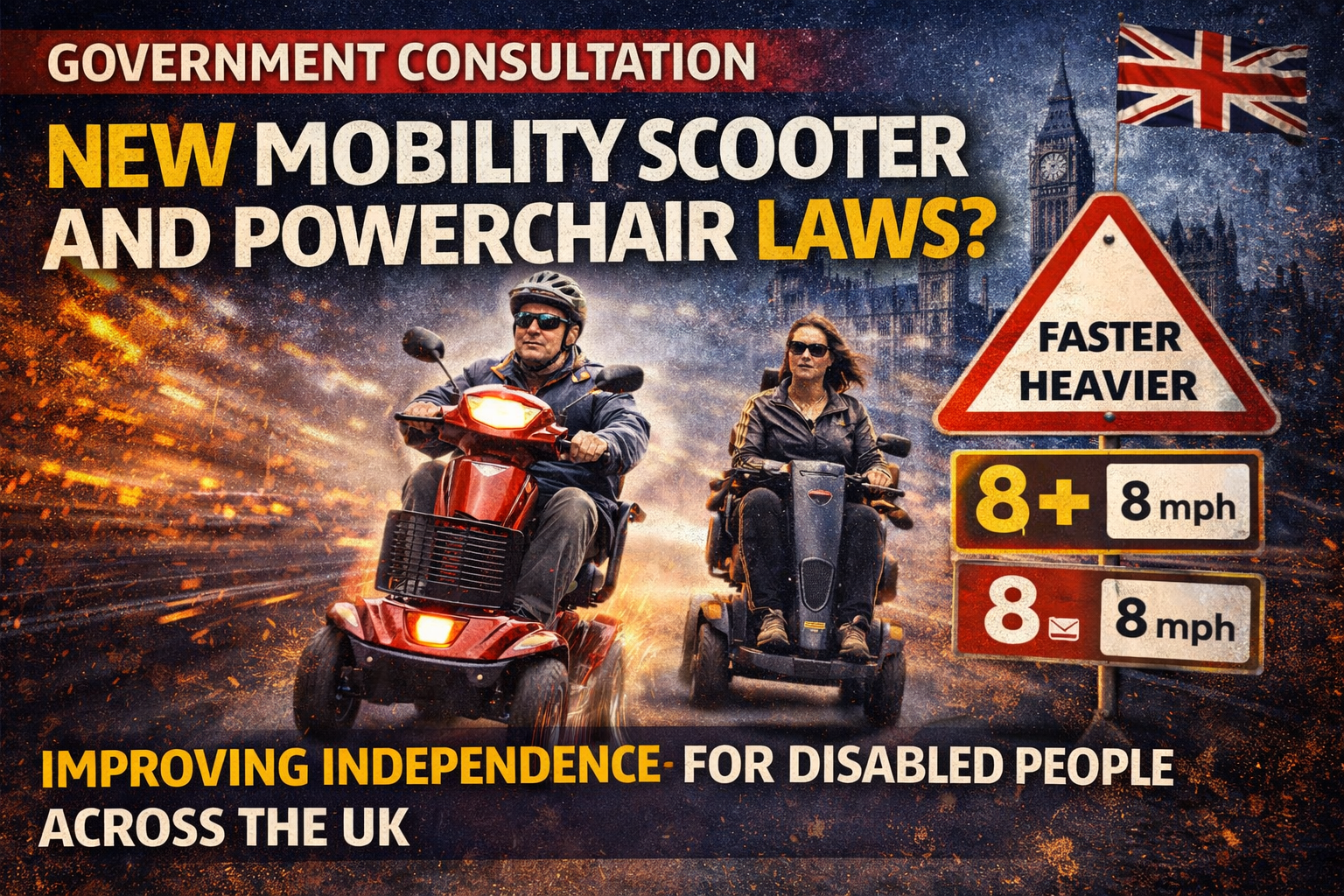
Exciting news for disabled people across the UK! The Department for Transport (DfT) has launched a crucial public consultation that could revolutionise how you use your mobility scooter or powerchair, offering greater freedom and independence.
For too long, outdated laws have restricted the speeds and weights of essential mobility devices, leaving many disabled individuals in a challenging legal position. But change is on the horizon, with proposals to allow electric wheelchairs and mobility scooters to travel at speeds of up to 20mph on UK roads and to significantly increase weight allowances.
The Challenges of Current Laws
Currently, powered wheelchairs and mobility scooters are limited to a mere 4mph on pavements and 8mph on roads. Devices that exceed these specifications are legally classified as 'motor vehicles', forcing users to navigate complex driving licence and insurance requirements – a barrier for many. Furthermore, these devices are largely prohibited from using cycle lanes, despite rental e-scooters being permitted to travel up to 15.5mph in these same lanes.
This antiquated framework, which dates back to the Chronically Sick and Disabled Persons Act 1970 and still uses the demeaning term 'invalid carriages', fails to account for the sophisticated and essential modern mobility devices disabled people rely on today.
The impact of these restrictions is deeply felt. Nathan Rollinson, a 35-year-old with motor neurone disease, shared his frustration after being pulled over by police for travelling 'too fast' in his 14mph adapted wheelchair, which he cannot lawfully operate on roads without complex DVLA registration. This forces him onto often inaccessible public transport, where he has been trapped in station lifts dozens of times.
Similarly, an army veteran with a degenerative spinal condition uses a 220kg powerchair that exceeds legal weight limits for pavements. This leaves him with an impossible choice: use dangerous A-roads alongside 44-tonne lorries just to 'pop to the shops'. The Wheelchair Alliance rightly describes these weight restrictions as placing many disabled people in an 'impossible legal position'.
What's Being Proposed?
The DfT's consultation aims to modernise these rules to better reflect contemporary technology and the needs of disabled people. Key proposals include:
- Increased Speed Limits: Advocacy groups have recommended more than doubling the existing 8mph road speed limit, with proposals suggesting speeds up to 20mph.
- Higher Weight Allowances: The maximum weight allowance could increase to approximately 300kg, ensuring modern, robust powerchairs are legally usable.
- Updated Terminology: The government proposes replacing the outdated and offensive term 'invalid carriage' with 'mobility device' in law, a much-needed step towards respectful and inclusive language.
- Greater Choice and Safety: The objectives include ensuring disabled people can legally use clinically needed equipment, allowing greater choice in mobility options, and safeguarding both actual and perceived safety for all road users.
Transport Minister Simon Lightwood confirmed the government's commitment to assessing these potential amendments, stating, "It is clear the legislation in its current form does not account for the modern mobility devices people need or want to use." He added that the government is "committed to championing the rights of disabled people."
How This Could Impact Your Life
These proposed changes could profoundly enhance your independence and quality of life. Imagine being able to travel at a speed that truly gets you where you need to go, reducing journey times and reliance on often unreliable public transport. Picture having access to a wider range of robust and comfortable mobility devices without facing legal hurdles or being forced onto dangerous roads.
This isn't just about speed; it's about dignity, choice, and finally having legislation that understands and supports the realities of modern disabled living.
Have Your Say – The Consultation Closes Soon!
This public consultation is your chance to directly influence the future of mobility laws in the UK. It launched on 6 January and will close on 22 April. Your experiences and perspectives are vital to shaping these crucial changes.
The consultation is the first formal step towards a broader legislative review announced for July 2025. By participating now, you can help ensure that the final laws truly reflect the needs and aspirations of disabled individuals across the country.
Don't miss this opportunity to contribute to a future where your mobility device empowers you, rather than restricts you.